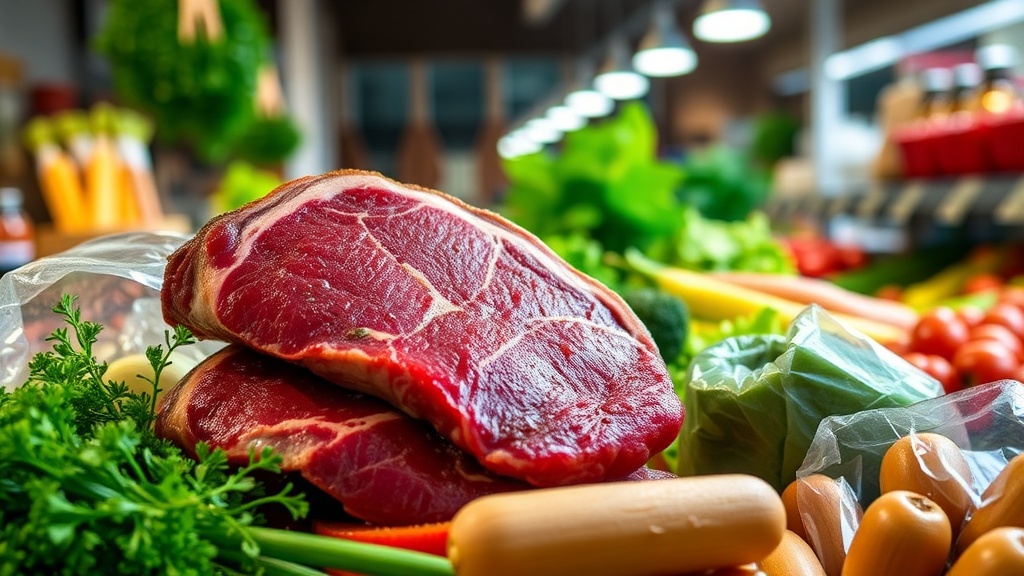
Why You Should Buy Meat and Produce in Bulk

You will learn how to strategically purchase meat and produce in bulk to reduce your weekly grocery bill and minimize food waste.
The grocery industry relies on a psychological trick called "unit price obfuscation." Retailers want you to focus on the big, shiny number on the price tag rather than the cost per ounce or pound. When you buy small, convenient packages of chicken breasts or pre-washed organic kale, you aren't just paying for the food; you are paying a massive premium for the packaging, the labor of chopping, and the convenience of "ready-to-eat" portions. This post breaks down the math of bulk purchasing for your two most expensive grocery categories—proteins and perishables—so you can stop overpaying for the aesthetic of a "neat" pantry and start building actual equity in your bank account.
The High Cost of Convenience in the Meat Aisle
Meat is often the single largest line item on a standard grocery receipt. If you are buying individual 1-lb trays of ground beef or 12-oz packs of chicken thighs at a standard supermarket like Jewel-Osco or Kroger, you are losing money. The markup on "pre-portioned" meats is often as high as 30% to 50% compared to the weight-based price of a larger primal cut or a bulk pack.
The Math of the "Family Pack"
Consider the standard 1-lb package of chicken breasts versus a 5-lb "Family Pack." Often, the 1-lb package is priced at a premium because the retailer knows the consumer values the ease of a single-use portion. By opting for the larger volume, you are effectively lowering your cost per pound. If the 1-lb pack is $5.99 and the 5-lb pack is $24.99, your cost per pound drops from $5.99 to $4.99. That $1.00 difference per pound adds up to $5.00 in savings on that single purchase. Over a year, if you buy meat weekly, that is $260 saved just by changing one habit.
Strategic Meat Buying Techniques
- Buy Primal Cuts: Instead of buying pre-sliced steak, buy a whole ribeye or New York strip. It requires a knife and five minutes of work, but you bypass the "butcher labor" markup.
- The Freezer is Your Best Friend: When you find a sale on a large quantity of ground turkey or beef, buy it all. Divide the meat into 1-lb or 2-lb freezer bags, flatten them out so they stack easily, and label them with the date.
- Avoid "Pre-Seasoned" Traps: Pre-marinated chicken or seasoned sausages are significantly more expensive than plain protein. You are paying for salt, oil, and spices that you already have in your pantry.
Maximizing Value in the Produce Section
Produce is where "aesthetic debt" hits hardest. The grocery industry has mastered the art of selling you "convenience" through pre-cut fruits and vegetables. A bag of pre-washed, chopped kale might cost $4.00, while a whole head of kale might cost $1.50. You are paying a nearly 160% markup for someone else to wash and chop a leafy green. To save money, you must revert to the whole form.
Bulk Produce vs. Pre-Processed Produce
The logic is simple: the more the grocery store does for you, the more you pay. This applies to almost every category in the produce aisle. To maximize your budget, follow these rules:
- Buy Whole Fruits and Vegetables: Buy the whole watermelon instead of the pre-cut cubes. Buy the entire block of parmesan instead of the shredded shaker. The labor cost is transferred directly to your bill.
- Seasonal Bulk Buying: Produce prices fluctuate wildly based on seasonality. If you want to buy in bulk, do it when the item is in peak season. For example, buying a massive bag of apples in October is significantly cheaper than buying a small, expensive bag in July.
- The "Ugly" Produce Advantage: Many stores, including stores like Aldi or Trader Joe's, often have slightly bruised or "imperfect" produce that is much cheaper. If you are planning to blend fruit into a smoothie or chop vegetables for a soup, the aesthetic perfection of the item is irrelevant.
Storage Strategies to Prevent Waste
The biggest argument against buying bulk produce is the fear of it rotting in your crisper drawer. If you buy a massive bag of spinach and it turns into green slime in three days, your "savings" are an illusion. To avoid this, use these storage methods:
- The Paper Towel Method: For leafy greens, place a dry paper towel inside the container or bag to absorb excess moisture. This can extend the life of your greens by several days.
- Blanch and Freeze: If you buy a large amount of broccoli or carrots on sale, blanch them in boiling water for 2 minutes, shock them in ice water, dry them, and freeze them. They will be perfect for future stir-fries.
- The Root Vegetable Rule: Keep your potatoes, onions, and garlic in a cool, dark place, but never together. Onions release gases that cause potatoes to sprout faster.
The Hidden Math of "Value Packs"
Not every "bulk" option is a good deal. Retailers are clever; they will often label something as a "Value Pack" or "Family Size" even when the price per unit is actually higher than the standard size. This is a tactic to make you feel like you are winning a deal when you are actually losing.
To avoid this, you must become a disciplined user of the unit price. Look at the tiny text on the shelf tag. It will usually list the price per ounce, per pound, or per count. Ignore the large price number and look exclusively at the unit price. If the 16-oz jar of peanut butter is $3.50 and the 40-oz jar is $4.50, the 40-oz jar is the better deal. If the 16-oz jar is $3.50 and the 40-oz jar is $5.50, the "bulk" option is a scam. Always verify the math before you put the item in your cart.
To further optimize your grocery budget, you should also consider why you should buy store brand products instead of name brands, as the savings on bulk items are even more pronounced when you aren't paying for a brand name.
Creating a High-Efficiency Meal Prep System
Bulk buying only works if you have a system to use the inventory. If you buy a 5-lb bag of rice and a 10-lb bag of chicken but don't have a plan, you will end up with a pantry full of expensive, unused ingredients. A successful bulk-buying strategy requires a "Reverse Meal Prep" mindset.
Instead of deciding what you want to eat and then buying ingredients, look at what you have in bulk and build around it. If you have a large quantity of frozen shrimp and a bulk bag of jasmine rice, your meals for the next three days are already decided. This reduces the "decision fatigue" that often leads to expensive takeout orders. When you have the components of a meal already in your freezer or pantry, the barrier to cooking at home is much lower.
The Inventory Audit
Before you head to the store—whether it's a local Costco, a wholesale club, or your neighborhood grocery store—perform a 5-minute inventory audit. Check your freezer, your pantry, and your refrigerator. Most people overbuy because they cannot remember what they already have. A simple list of "Current Inventory" versus "Needed Items" will prevent you from buying a third jar of spices or a fourth bag of frozen peas.
Summary of the Bulk-Buying Framework
To successfully navigate the grocery store as a savvy consumer, you must adopt a skeptical eye toward packaging and convenience. The goal is to move away from the "single-use" mindset and toward a "component-based" mindset. By focusing on whole foods, checking the unit price, and investing in storage solutions, you can significantly reduce your food expenditure without sacrificing quality.
- Prioritize: Whole cuts of meat, whole fruits/vegetables, and seasonal items.
- Avoid: Pre-cut, pre-washed, and pre-seasoned products.
- Verify: Always check the price per ounce or pound on the shelf tag.
- Preserve: Use freezing, blanching, and proper storage to prevent waste.