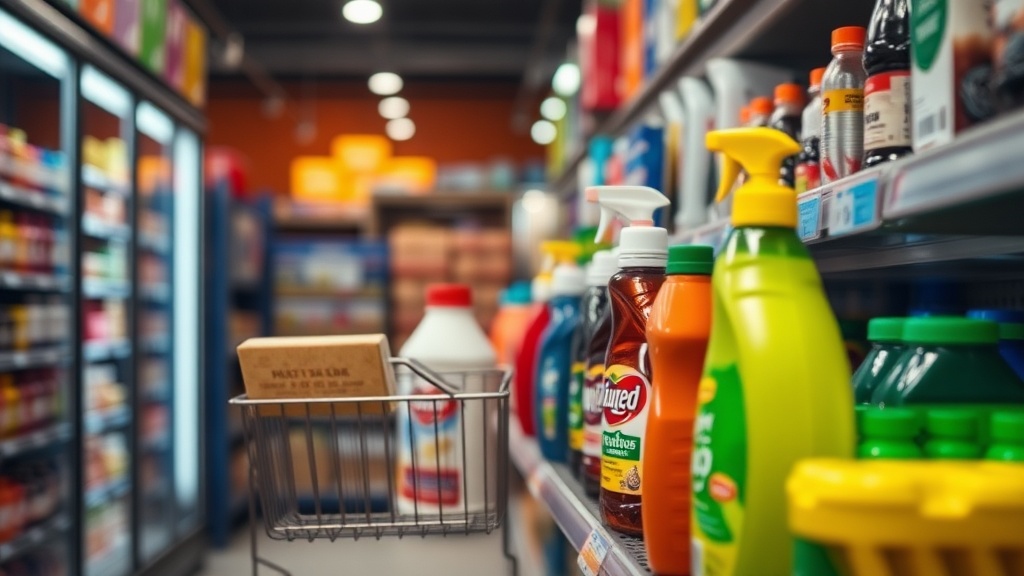
Why You Should Buy Store Brand Products Instead of Name Brands

Are you actually paying for the product, or just the marketing budget?
Most shoppers walk through the aisles of a Kroger or a Target believing that the premium price tag on a name-brand item translates to higher quality. In reality, a significant portion of that markup goes toward television commercials, celebrity endorsements, and elaborate packaging design rather than the ingredients inside. This post breaks down the math behind the "brand tax" and explains why switching to store brands—often called private labels—is one of the fastest ways to reduce your monthly grocery bill without sacrificing the quality of your lifestyle. We will examine the manufacturing realities of the retail industry, identify which categories offer the best value, and provide a strategy for auditing your pantry to avoid aesthetic debt.
The Illusion of the Premium Ingredient
The biggest misconception in the grocery industry is that name brands own the secret formulas for basic staples. If you look closely at the ingredient lists on the back of a box of organic oats from Quaker versus a 365 by Whole Foods Market brand, you will often find they are identical. The primary difference is the "brand premium." When you buy a name brand, you are paying for the trust established by decades of advertising. Retailers know that consumers are risk-averse, so they charge a premium for that perceived safety.
Consider the case of basic pantry staples like salt, granulated sugar, or flour. These are commodities. There is no "luxury" version of iodized salt that fundamentally changes the chemistry of your baking. When you choose the store brand, you are stripping away the cost of the brand's multi-million dollar Super Bowl ad campaign and paying only for the commodity itself. This is a fundamental rule of smart shopping: if the ingredient list is short and the product is a commodity, the name brand is almost always a bad deal.
The Co-Packing Reality: Why Quality is Often Identical
One of the most effective ways to debunk the "quality gap" is to understand the concept of co-packing. Many high-end name brands do not actually own their manufacturing facilities. Instead, they contract out production to third-party manufacturers, known as co-packers. These same facilities often produce the store brands for the same retailers. This means the "premium" cereal you buy might be coming off the exact same assembly line as the "budget" version sitting two shelves below it.
For example, many major snack food companies use the same manufacturing plants to produce both their flagship brands and the private label versions for big-box retailers. The only difference is the box design and the level of marketing support. By recognizing this, you can stop viewing store brands as "inferior" and start viewing them as the "unbranded" version of the same high-quality product. To ensure you are getting the best value, you should always check the unit price label to see exactly how much you are saving per ounce or per gram.
Where to Switch and Where to Stay Put
While the savings are massive, a blanket approach to switching can sometimes lead to disappointment if you aren't strategic. You need to categorize your shopping list into "Safe Swaps" and "High-Stakes Items."
The Safe Swaps (High Value/Low Risk):
- Dairy and Eggs: Milk, butter, and large eggs are almost always identical across brands. A gallon of Great Value milk has the same nutritional profile as a name-brand gallon.
- Canned Goods: Canned beans, diced tomatoes, and corn are incredibly consistent. The name brand is often just paying for a more colorful label.
- Cleaning Supplies: Most household cleaners, such as dish soap or window spray, rely on basic chemical compositions. Store brands like Target’s Up & Up offer highly effective solutions for a fraction of the cost of specialized brands.
- Spices: While some enthusiasts argue about freshness, the actual spices in a generic jar are often sourced from the same global suppliers as the premium brands.
The High-Stakes Items (Proceed with Caution):
- Specialty Condiments: While basic ketchup is fine, high-end condiments like specific aged balsamic vinegars or artisanal Dijon mustards may have subtle flavor profiles that are difficult to replicate in a generic version.
- Complex Frozen Meals: If you rely on a specific texture or a very specific spice blend in a frozen entree, the store brand might lack the nuance of the original.
- Skincare and Cosmetics: While many drugstore brands are excellent, certain highly specialized serums or color-matching foundations can be tricky to swap without testing first.
The Math of the Markup: A Real-World Comparison
To understand the scale of the savings, let's look at a hypothetical weekly grocery run for a single household. Imagine you are shopping at a major retailer like Wegmans or Publix. If you stick exclusively to name brands for your pantry essentials, you are effectively paying a "brand tax" that can add up to 30-50% to your total bill.
Scenario A: The Name-Brand Shopper
- Olive Oil (Premium Brand): $14.99
- Greek Yogurt (Large Tub): $6.50
- Organic Coffee (Major Brand): $11.00
- Pasta Sauce (Premium Brand): $5.99
- Total for these 4 items: $38.48
Scenario B: The Strategic Store-Brand Shopper
- Olive Oil (Store Brand): $8.99
- Greek Yogurt (Store Brand): $4.25
- Coffee (Store Brand): $7.50
- Pasta Sauce (Store Brand): $3.49
- Total for these 4 items: $24.23
In this small sample, the shopper saved $14.25—nearly 37%. When applied to an entire monthly grocery budget, this is the difference between struggling to save and actually building a cushion. This isn't just about being "cheap"; it's about being an efficient consumer who refuses to pay for the privilege of a logo.
How to Audit Your Shopping Habits
If you want to start implementing this strategy immediately, do not try to change your entire pantry overnight. That is a recipe for frustration. Instead, follow this three-step audit process:
- The Ingredient Audit: Next time you are at the store, pick up a name-brand item and its store-brand counterpart. Turn them both around and read the ingredients. If the first five ingredients are identical, make the switch.
- The Unit Price Check: Before placing an item in your cart, look at the small text on the shelf tag. This tells you the price per ounce. Often, a larger "value size" name brand is actually more expensive per ounce than a smaller store-brand container.
- The Trial Run: Buy one store-brand item per week. Use it in a recipe you know well. If it performs exactly as expected, add it to your permanent rotation. If it fails the taste test, go back to the name brand for that specific item.
By using this method, you are building a more resilient budget without the shock of a sudden change in your lifestyle. You are essentially training yourself to see past the shiny packaging and focus on the actual utility of the product.
The Psychology of the "Aesthetic Debt"
We live in an era where "aesthetic" is a currency. Social media influencers often promote specific, high-end brands of coffee, pantry canisters, or kitchen staples to create a certain "look." This creates a psychological pressure to own the "right" brands, even if the quality is negligible. This is what I call aesthetic debt: the act of spending more than necessary to maintain a curated image of a certain lifestyle.
Choosing the store brand is a quiet act of rebellion against this consumerist pressure. It is a declaration that you value your actual bank balance more than the perceived status of a specific brand of almond milk. When you stop caring about the logo on the box, you reclaim control over your finances. You realize that the "luxury" experience is often just a very expensive illusion designed to keep you spending.
If you are looking for ways to maximize your savings beyond just the grocery aisle, you might also be interested in learning how to find free samples and hot deals to further stretch your budget. Whether it's through smarter brand choices or finding high-value freebies, the goal remains the same: keep more of your money in your pocket and less in the hands of massive corporations.