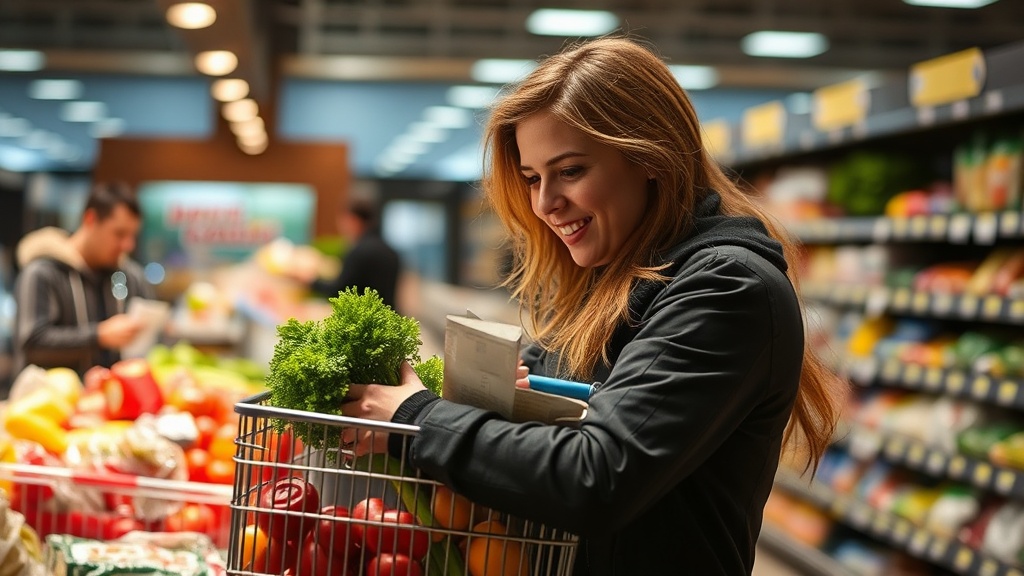
The Grocery Loophole: Turning Your Receipt into Free Groceries

The $14 Billion Oversight: Why Your Receipt is Actually a Currency
The average American household loses approximately $1,200 annually to "invisible leakage"—money spent on products that were eligible for instant rebates, cashback, or manufacturer offers that the consumer simply failed to claim at the point of sale. This isn't just a lack of organization; it is a systematic failure to reclaim the value embedded in your transaction history. While most shoppers view a grocery receipt as a post-mortem of their spending, savvy consumers view it as a raw data set for future credit.
The "Grocery Loophole" is not a single trick, but a multi-layered strategy of converting documented spending into liquid assets. By the time you walk out of a Trader Joe's or a Whole Foods, the transaction is technically "finished" in the eyes of the retailer, but the actual value extraction process for the consumer has only just begun. To navigate this, you must move beyond the basic mental math of a grocery list and start treating your receipts as digital vouchers.
Phase 1: The Receipt-to-Cashback Pipeline
Most people understand the concept of a digital coupon, but very few understand the mechanics of receipt scanning. This is the most direct way to turn a standard transaction into a credit. Apps like Fetch Rewards or Ibotta do not just offer "discounts"; they function as automated data scrapers that validate your purchases against manufacturer databases.
To maximize this, you cannot simply scan at random. You must target high-margin, high-frequency items. For example, if you are buying a specific brand of oat milk like Oatly or a certain brand of Greek yogurt like Chobani, checking the app before you hit the checkout line is non-negotiable. The goal is to ensure that the specific SKU (Stock Keeping Unit) you are holding is currently "active" in the app’s database. If you buy the wrong version—say, the vanilla instead of the plain—the receipt scan will fail to trigger the credit, and your effort is wasted.
Actionable Tactic: Before your next trip to a major grocer, open your preferred cashback app and search for "staples." Look for high-value offers on items you buy weekly, such as laundry detergent (Tide or Persil) or coffee (Starbucks or Peet's). By aligning your actual shopping list with the app's active offers, you are essentially pre-loading your receipt with value that will return to you as a digital gift card or PayPal transfer.
Phase 2: The Loyalty Program Arbitrage
Retailers like Kroger, Target, and Safeway use loyalty programs to track your behavior, but you should use them to manipulate your price per unit. The mistake most consumers make is treating the "Loyalty Card" as a simple way to get a $0.50 discount on avocados. In reality, these programs are sophisticated data-gathering tools that allow for highly targeted "Just For You" offers.
To exploit this, you must engage in intentional purchasing patterns. If you want the system to provide you with high-value digital coupons for organic produce or premium proteins, you must buy those items consistently while using your loyalty ID. The algorithm will recognize the pattern and begin injecting deep discounts for those specific categories into your account. This is how you move from a general shopper to a targeted recipient of high-value digital offers. Beyond the coupon approach, you should be looking for the intersection where your loyalty data meets third-party cashback apps.
The Math of the "Digital Load": If a standard grocery run costs $150, a passive shopper sees $150 leave their bank account. An active user who has "loaded" their digital coupons and aligned their purchases with loyalty offers can often reclaim $15 to $25 of that through a combination of instant discounts and delayed cashback. Over a year, that is a significant percentage of a monthly grocery budget reclaimed through sheer data management.
Phase 3: The Error Detection Protocol
One of the most overlooked ways to get "free" groceries is through the rigorous auditing of your receipts for pricing errors. Retailers frequently experience "price drift," where the price listed on the shelf does not match the price programmed into the POS (Point of Sale) system. This is common in the produce and meat departments where weights and seasonal pricing fluctuate rapidly.
If you see a sign for organic blueberries at $3.99/pint, but the receipt shows you were charged $4.49, you are not just looking at a mistake; you are looking at an unrecovered asset. Most major retailers have a policy to honor the lower price, but they will never proactively correct it unless prompted.
- The "Scan-As-You-Go" Method: Use your phone to scan items as you put them in your cart. This allows you to identify price discrepancies in real-time, rather than waiting until you are at the checkout line and feeling the social pressure to move quickly.
- The Weight Discrepancy Check: For items like deli meats or bulk grains, check the weight on your receipt against the weight on the package. If the weight is lower than what you paid for, you are literally paying for air.
- The "Double-Scan" Audit: Occasionally, a barcode will scan twice by mistake. A quick glance at the quantity column on your receipt can save you $5 to $10 on a single transaction.
Phase 4: The Circular Economy of Gift Cards
The final step in turning a receipt into free groceries is the conversion of earned credit into liquid purchasing power. Many of the cashback apps mentioned earlier reward you with points that can be redeemed for specific retailer gift cards. This is where the real "loophole" closes. Instead of receiving a small percentage of cash back, you are essentially creating a closed-loop system of value.
For example, if you use a service that offers high-value rewards for grocery spending, you can often redeem those rewards for a gift card to a retailer that isn't even your primary grocer. This allows you to pivot your spending to whichever store is currently offering the best "loss leader" deals. If Whole Foods is running a massive sale on rotisserie chickens and organic greens, but your primary cashback is tied to a different chain, you can use the strategic movement of gift cards to bridge the gap.
To master this, you should also look into scoring high-value gift cards through secondary platforms. By stacking a grocery-specific cashback app with a general-purpose reward platform, you are effectively layering your discounts. You aren't just getting a discount on the milk; you are getting a discount on the milk, plus points toward a gift card, which you then use to buy more milk.
The Workflow Checklist
To ensure you aren't leaving money on the table, follow this strict operational workflow for every grocery trip:
- Pre-Trip: Open your primary grocery app (e.g., Kroger, Target) and "clip" all digital coupons related to your list. Open your cashback app (e.g., Ibotta) and check for high-value offers on your core staples.
- In-Store: Use a handheld scanner or your phone to verify the price of high-cost items (proteins, organic produce, specialty cheeses) against the shelf tag.
- At Checkout: Ensure your loyalty ID is scanned. If you are using a mobile app for payments, ensure the transaction is being tracked by your cashback platforms.
- Post-Trip: Within 24 hours, scan your physical or digital receipt into your cashback apps. Do not let these receipts pile up; the window for certain "instant" offers can be narrow.
- Monthly Audit: Once a month, tally your "Reclaimed Value." Subtract your total cashback and digital savings from your total spent. This number is your actual "Cost of Living," and it should be significantly lower than your bank statement suggests.
The goal is to move from a consumer mindset to an analyst mindset. The grocery store is designed to make you spend; the loophole is designed to help you reclaim. Stop viewing your receipt as a record of what you lost, and start treating it as a ledger of what you are owed.
Steps
- 1
Download High-Yield Receipt Apps
- 2
Scan Every Single Receipt Immediately
- 3
Stack Digital Coupons with App Rewards
- 4
Redeem Points for Gift Cards or Direct Cash