Beyond the Coupon: Using Cashback Apps to Reclaim Your Grocery Budget

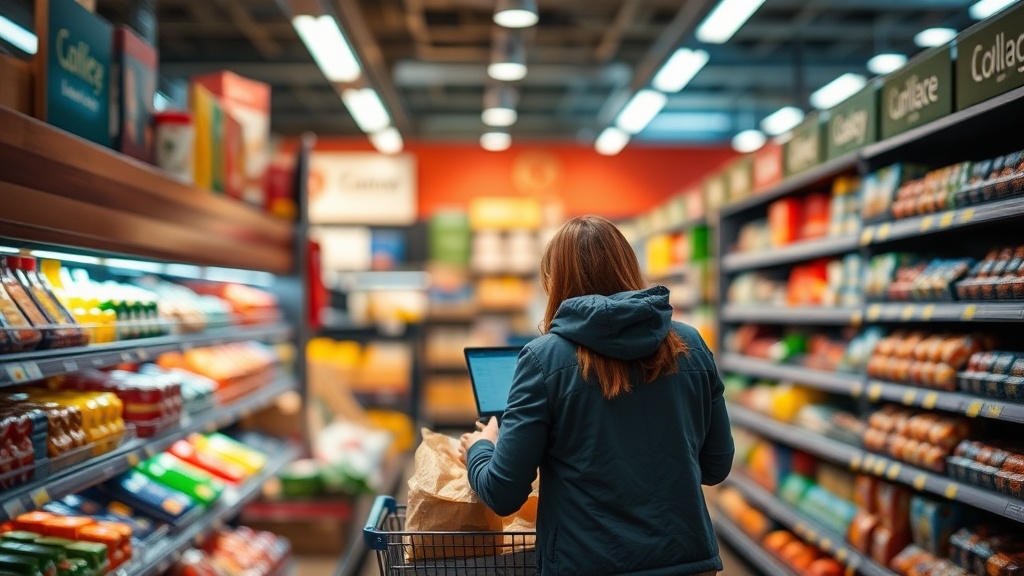
The fluorescent hum of a mid-week grocery run at a Trader Joe’s or a local Whole Foods often feels like a slow-motion heist. You reach for a jar of organic almond butter, a carton of oat milk, and a bunch of organic kale, only to watch the total climb with a speed that defies logic. The price tag on the shelf is the "sticker price," but by the time you hit the register, the psychological toll of the transaction is much higher. We are conditioned to accept these incremental increases as the cost of living, but there is a significant gap between what you pay and what you actually "should" be paying if you leveraged the backend of the retail economy.
The truth is that modern grocery shopping has moved beyond the era of the paper clipping. The retail industry has shifted its loyalty from the physical coupon to the digital cashback ecosystem. While traditional coupons require a high level of manual labor for a negligible return, cashback apps operate on a different mathematical plane. They are essentially a way to reclaim a percentage of your spend by participating in the data-sharing economy. If you are going to give your consumer data to a corporation anyway, you might as well get a dividend for it.
The Anatomy of the Cashback Economy
To use these tools effectively, you must first understand why they exist. Companies like Ibotta, Rakuten, and Fetch Rewards aren't charities; they are data aggregators. When you scan a receipt or link your email, you are providing proof of purchase that validates market trends. The "rebate" you receive is actually a small portion of the marketing budget that brands set aside to incentivize brand switching or loyalty. Instead of spending millions on a Super Bowl ad, a brand like Nestlé or General Mills allocates funds to these platforms to ensure you keep choosing their product over a generic competitor.
There are three primary tiers of cashback mechanisms you should be utilizing to maximize your recovery rate:
- Direct Product Rebates: These are tied to specific SKUs (Stock Keeping Units). For example, if you buy a specific brand of Oatly milk, you receive a set amount back.
- Receipt Scanning: These apps reward you for the sheer volume of your shopping. You take a photo of a receipt from any retailer—be it a local corner store or a massive supermarket—and earn points based on the total or specific items found.
- Browser Extensions and Link-Based Cashback: These are more common for online grocery orders via services like Instacart or Amazon Fresh, where a percentage of the total basket is returned to your digital wallet.
Building Your Digital Toolkit: The Top Performers
Not all apps are created equal, and using the wrong one for the wrong task is a waste of your time. If you are looking for a high-yield strategy, you need to categorize your tools by their utility.
1. The High-Precision Player: Ibotta
Ibotta is the gold standard for high-margin, specific product returns. It works best when you are shopping for branded goods—think Kleenex, Perdue Chicken, or Ben & Jerry’s. The key to Ibotta is not to hunt for deals, but to integrate it into your existing list. If you already buy Heinz Ketchup, check Ibotta first. If there is a $0.50 or $1.00 offer, you click "add to cart" in the app. This ensures you aren't buying products just to get the rebate, which is a common trap that leads to "aesthetic debt"—buying things you don't need just to feel like you're "saving."
2. The Low-Effort Accumulator: Fetch Rewards
Fetch is the tool for the person who doesn't have time to hunt for specific SKUs. You simply snap a photo of any receipt from any grocery store. While the per-item return is much lower than Ibotta, the friction is nearly zero. This is your "catch-all" for the miscellaneous items—the avocados, the sourdough bread, the sparkling water—that don't have specific branded offers. It is a passive way to build a small fund for gift cards or digital payment transfers.
3. The Grocery-Specific Integration: Store-Specific Apps
Before you even look at a third-party app, you must master the art of grocery store apps. Retailers like Kroger, Target, and Safeway have their own proprietary loyalty programs. These are not "cashback" in the traditional sense, but they provide digital coupons that are deducted at the point of sale. The most efficient way to shop is to use the store app to lower the initial price, and then use a third-party app like Ibotta to reclaim a portion of that already-discounted price. This "double-dipping" is where the real math happens.
The Advanced Strategy: The "Stacking" Method
If you want to move beyond the amateur level, you need to practice "stacking." Stacking is the process of layering multiple discounts on a single transaction to drive the net cost of a product down to its absolute floor. This requires a disciplined approach and a bit of pre-shopping research.
- Step 1: The Base Discount. Check your store's weekly circular or digital app. Find a sale on a staple, such as a 2-for-$6 deal on Greek Yogurt.
- Step 2: The Digital Coupon. Check if the brand has a digital coupon available in the store's app (e.g., $1.00 off two yogurts).
- =Step 3: The Third-Party Rebate. Check Ibotta or Fetch for a rebate on that same yogurt brand.
- Step 4: The Payment Layer. Pay using a credit card that offers a percentage of cashback on groceries (such as an Amex Blue Cash Preferred or a Chase Freedom card).
By the time you finish this sequence, a product that originally cost $3.50 might effectively cost you $2.10. This isn't just a few cents; over a year of consistent grocery shopping, this methodology can reclaim hundreds, if not thousands, of dollars from your annual food budget.
Avoiding the "Rebate Trap"
As an analyst, I see many consumers fall into the trap of "phantom savings." This happens when you spend $10 on a product you didn't need simply because there was a $2.00 cashback offer. This is a net loss of $8.00, yet the brain registers it as a "win." To avoid this, you must adhere to a strict rule: Never buy a product specifically for the rebate.
The rebate should be a reward for a purchase you were already planning to make. If you find yourself browsing the Ibotta app for "deals" rather than checking it for "savings" on your existing list, you have lost control of the math. The goal is to minimize your grocery expenditure, not to maximize your "rebate earnings."
Practical Implementation: A Weekly Workflow
To make this a habit without it becoming a second job, follow this 15-minute weekly workflow:
Monday (5 Minutes): Open your primary grocery app (e.g., Target or Kroger). Look at the "Deals" or "Digital Coupons" section. Clip anything that applies to your staples. This creates your baseline price.
Wednesday (5 Minutes): Open Ibotta and Fetch. Search for the 3-5 high-value items on your list (meat, dairy, specific snacks). "Add" them to your digital offers. This is your potential recovery.
Saturday (5 Minutes): After your grocery run, take 60 seconds to scan your receipts into Fetch and Ibotta. Do not let receipts pile up in your car or your junk drawer; the longer you wait, the more likely you are to lose the motivation to complete the task.
By treating your grocery budget like a small business treats its procurement, you shift from a passive consumer to an active participant in the economy. You are no longer just paying the price on the tag; you are negotiating your way to a more efficient, data-driven way of living. Stop letting the retail markup go unrecovered.