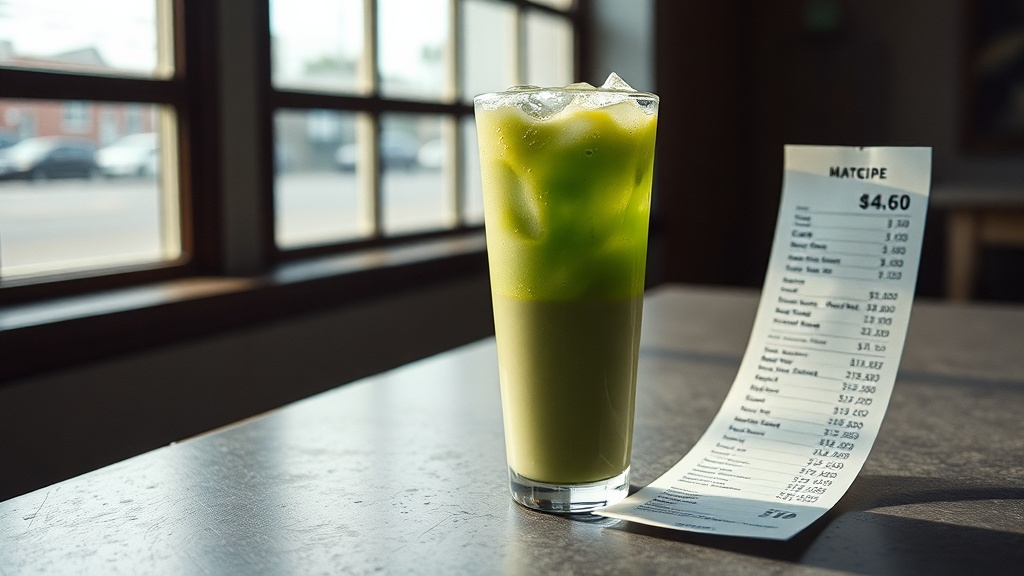
The $14 Matcha Scam: How to Buy the Exact Same Powder for 20 Cents

I love matcha. I do not love paying rent-level money for green milk in a pretty cup.
With iced matcha season kicking off, we need to talk about the most profitable little performance in wellness retail: the $14 "ceremonial" latte that can cost well under $2 in direct drink inputs.
I used to sit in rooms where people debated whether a matte sage tin could support a 4x price bump. Nobody talked about leaf quality for more than five minutes. Everybody talked about margins.
So here's the breakdown.
1) The "Ceremonial Grade" Myth
In the U.S., much like the meaningless "clean beauty" label, "ceremonial grade" is not a protected legal standard like USDA Organic.
That means brands can print it on very different powders and let vibes do the rest.
Ippodo (a long-running Kyoto tea company) explicitly says it does not use the term in Japan, and that the phrase was created for overseas markets. Translation: this label is mostly retail shorthand, not a quality guarantee.
What matters more than the word "ceremonial":
- harvest season and cultivar
- origin (Uji, Nishio, Yame, etc.)
- color and aroma freshness
- bitterness/astringency in water, not milk
- how recently it was milled and how it was stored
If a brand can't tell you those details but keeps repeating "ceremonial," you are paying for copywriting.
2) How White-Label Matcha Becomes a $40 Aesthetic Tin
Here's the common pipeline:
- A mill or blender produces matcha lots in bulk.
- Importers/distributors sell those lots to brands, cafes, and private-label buyers.
- A DTC brand buys bulk, repackages in smaller tins, adds story language, and raises price.
Private-label marketplaces openly advertise this setup: low MOQs, custom packaging, and broad price tiers by grade/certification.
Important nuance: not every brand is reselling the exact same lot. But many small brands source from overlapping importer networks and producer tiers, which can make quality differences smaller than the price differences suggest.
3) Your $14 Cafe Matcha, Costed Like an Adult
This is an illustrative U.S. cafe scenario (not a universal cost sheet), using a 16 oz iced matcha latte with 2g matcha and common foodservice inputs as of March 6, 2026.
Example input ranges:
- matcha powder (2g): $0.20 to $0.45
- milk/oat milk: $0.45 to $0.95
- sweetener + ice + cup/lid/straw: $0.30 to $0.65
- direct drink inputs total: about $0.95 to $2.05
Labor, rent, utilities, waste, and card fees are real and should be paid for. But if you're buying one daily, you're still funding a very healthy margin structure (a retail illusion we also found with luxury silk pillowcases).
Five weekday matchas at $14 = about $280/month before tip.
4) The Wholesale Hack: Get to ~20 Cents per Serving
Step A: Use catalog math, not influencer math
Live example (as listed on March 6, 2026):
- Marukyu Koyamaen Wakatake 100g listed around ¥3,340
- FX snapshot on March 6, 2026: ~¥157.6/USD (approx.), so ~US$21.20
- 100g = ~50 servings at 2g each
- per-serving powder cost: about $0.42
That is already dramatically below cafe pricing.
Step B: Move up to larger-format bags
In foodservice channels, 500g to 1kg formats usually lower per-gram cost.
Illustrative bulk band (as of March 2026 listings across import/wholesale sellers):
- roughly $90 to $120 per kg
- at 2g per drink: about $0.18 to $0.24 per serving
That's your 20-cent zone.
Step C: Vet sellers like a buyer, not a fan
Ask for:
- origin + region and whether it's single-origin or blended
- harvest date and milling-date window
- storage and shipping conditions
- heavy metal and pesticide testing documentation
- sample policy before bulk purchase
No documentation, no deal.
5) A Quick Reality Check on "Exact Same Powder"
Sometimes it is the same lot. Sometimes it is a nearby blend from the same producer class. In both cases, the price gap is often packaging size, branding overhead, and channel markup more than a dramatic quality cliff—similar to the lack of real differences between premium and budget leggings.
If you drink matcha daily, buy like a mini cafe:
- one solid daily-drinker bag for lattes
- one smaller premium tin for straight whisked bowls
That combo still costs less than a week of aesthetic cafe runs.
Bottom Line
You're not crazy. A lot of the matcha market is branding language wrapped around commodity economics.
Buy from transparent suppliers, skip the lifestyle tax, and keep your money for literally anything else in this economy.