
How to Stop Overpaying for Everyday Products (The Math Behind Every Purchase)

The Verdict: You’re overpaying for at least 70% of what’s in your apartment. Not because you’re careless—because brands are very good at selling you packaging instead of product. This is your reset. We’re fixing it with actual math.
I’ve worked behind the curtain. I’ve seen the spreadsheets. That $60 candle? Costs about $4 to produce. The rest is branding, influencer seeding, and vibes. Let’s remove the vibes.

Step 1: Start With The Real Question (What Are You Actually Buying?)
Before you click “Add to Cart,” pause and ask: what is this made of, and what problem does it solve?
Example: "Luxury" laundry detergent. Strip it down:
- It’s soap + fragrance + water
- Packaged in a glass bottle (nice, but not magical)
- Priced at 4–6x standard detergent
The Math: If the active ingredients are identical, you’re paying for branding and scent storytelling.
Step 2: Break Down the Price (Material vs. Markup)
This is where brands hope you won’t look.
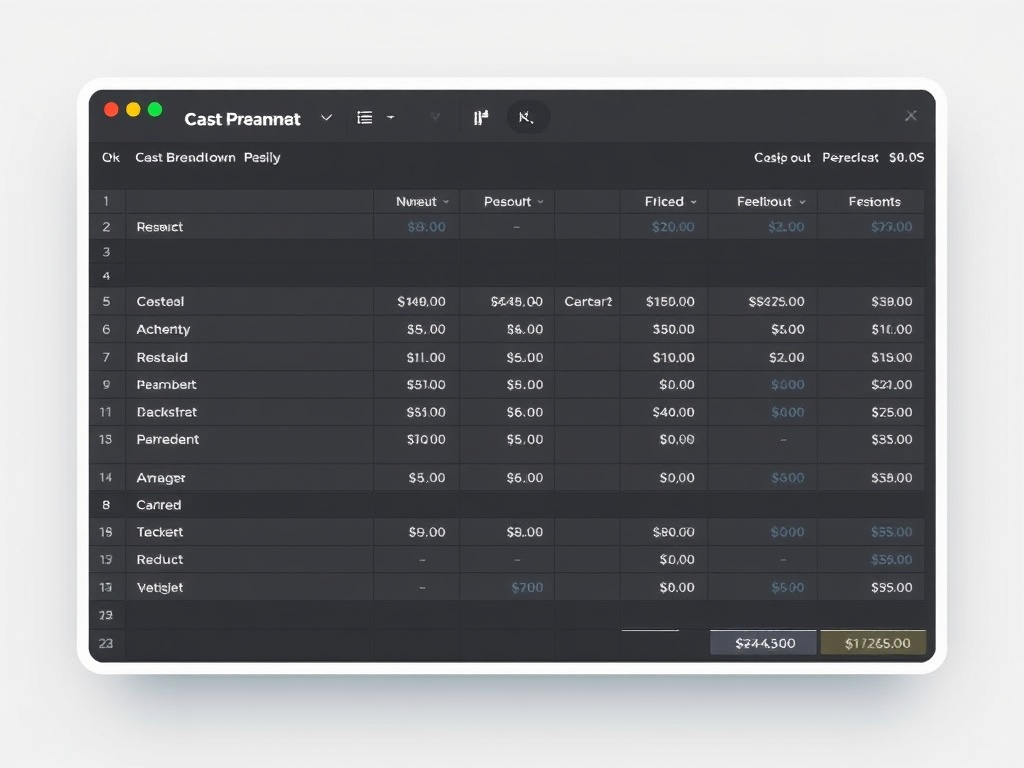
Most consumer goods follow a predictable structure:
- Manufacturing: 10–25%
- Packaging: 5–20%
- Marketing + Influencers: 20–50%
- Retail markup: 2x–5x
That means your $120 “minimalist” backpack likely costs $18–$25 to produce.
Translation: You’re paying for the story, not the stitching.
Step 3: Read the 1-Star Reviews First
This is non-negotiable.
Five-star reviews tell you how people felt. One-star reviews tell you what actually broke.
Look for patterns:
- “Stopped working after 3 weeks”
- “Fabric pilled immediately”
- “Smells like chemicals”
If you see the same complaint repeated? That’s not user error. That’s design failure.
(Brands will bury this under 3,000 glowing reviews from people who opened the box yesterday. Cute.)

Step 4: Calculate Cost-Per-Use (This Is Where It Gets Real)
Price means nothing without usage.
Take a $100 pair of shoes:
- Worn 100 times = $1 per wear
- Worn 10 times = $10 per wear
Suddenly the “cheap” $40 pair that falls apart after a month is the expensive option.
The rule: durability beats aesthetics every time.

Step 5: Find the Unbranded Version
This is my favorite part.
Most “premium” products are manufactured in the same factories as their generic counterparts. The difference is branding, not build quality.
Where to look:
- Wholesale marketplaces
- Store brands (Target, Costco, etc.)
- Industrial suppliers (for home goods)
Example: A $90 “aesthetic” glass storage set vs. a $28 restaurant supply version made of the same borosilicate glass.
Same factory. Different font.
Step 6: Watch for the “Aesthetic Tax”
If it looks like it belongs in a perfectly beige Instagram kitchen, it’s probably marked up.
The aesthetic tax shows up in:
- Neutral color palettes
- Matte finishes
- Minimalist packaging
None of these improve performance. They just photograph well.
(You are not buying a personality. You already have one.)

Step 7: Set a Personal “No-Regret” Rule
Here’s mine: if I hesitate for more than 30 seconds, I don’t buy it.
You can customize this, but the goal is friction. Brands rely on impulse. You need a pause.
Try:
- 24-hour rule for anything over $50
- Cost-per-use estimate before checkout
- One-in, one-out rule for duplicates
This alone will cut your spending in half. Not exaggerating.

Step 8: Keep a “Regret Log”
This is where you get honest with yourself.
Write down:
- What you bought
- What you expected
- What actually happened
Patterns will show up fast. Mine was “overpriced skincare with fragrance as the second ingredient.” Never again.
(Your future self will thank you. Your past self… tried her best.)

Final Reality Check
You don’t need better taste. You need better filters.
The goal isn’t to stop buying things—it’s to stop funding bad products.
Keep or Toss: Keep the method. Toss the impulse buys.
Now go look at something you almost bought this week and run the math. You’ll see it immediately. (lol)
Steps
- 1
Start With The Real Question
- 2
Break Down the Price
- 3
Read the 1-Star Reviews
- 4
Calculate Cost-Per-Use
- 5
Find the Unbranded Version
- 6
Watch for the Aesthetic Tax
- 7
Set a No-Regret Rule
- 8
Keep a Regret Log